The Physics of Saving Lives ⚡️
What does it take to turn a struggling startup into a global force for public safety?
For Max Nerheim — Axon’s first electrical engineer — it started with a $20,000 fixed-price contract, a lab in a literal broom closet, and the guts to tell the founders their original design was “a piece of junk.”
In this episode of the Boldly Go Podcast, Rick and I sit down with the man who holds more TASER patents than anyone on the planet. Max shares the untold “wild west” history behind the M26 and X26 — from testing prototypes in his garage to out-innovating PhDs who thought they knew more.
You’ll hear the story of a parking-lot confrontation with a patent lawyer trying to shake down the company — and why TASER 7 remains one of Max’s favorite designs.
Oh, and since the statute of limitations has passed — we think — you’ll also hear about a roadside encounter between a TASER and a 🦌
🎙️ You can also find this episode — and all episodes — on Apple Podcasts and Spotify. If you enjoy it, please like, comment, and follow.
Countering Drones 🚫
This past week, Rick spent time at Dedrone’s facility in Kassel, Germany with the team advancing airspace security as a serious, operational layer of modern safety infrastructure.
The airspace above airports, stadiums, and large scale events like the Super Bowl and NASCAR races is active and crowded. Authorized drones support media, inspections, logistics, and public safety operations. In the same environment, unauthorized drones can disrupt flights, compromise security perimeters, or create real risk for dense crowds. Managing that mix requires precision, not blunt force.
Dedrone’s platform combines multi sensor detection, AI driven signal analysis, and real time identification to distinguish cooperative aircraft from drones that should not be there. Security teams gain immediate visibility into their airspace and the ability to act quickly and proportionately. The system integrates into existing command environments and delivers clarity without slowing operations down.
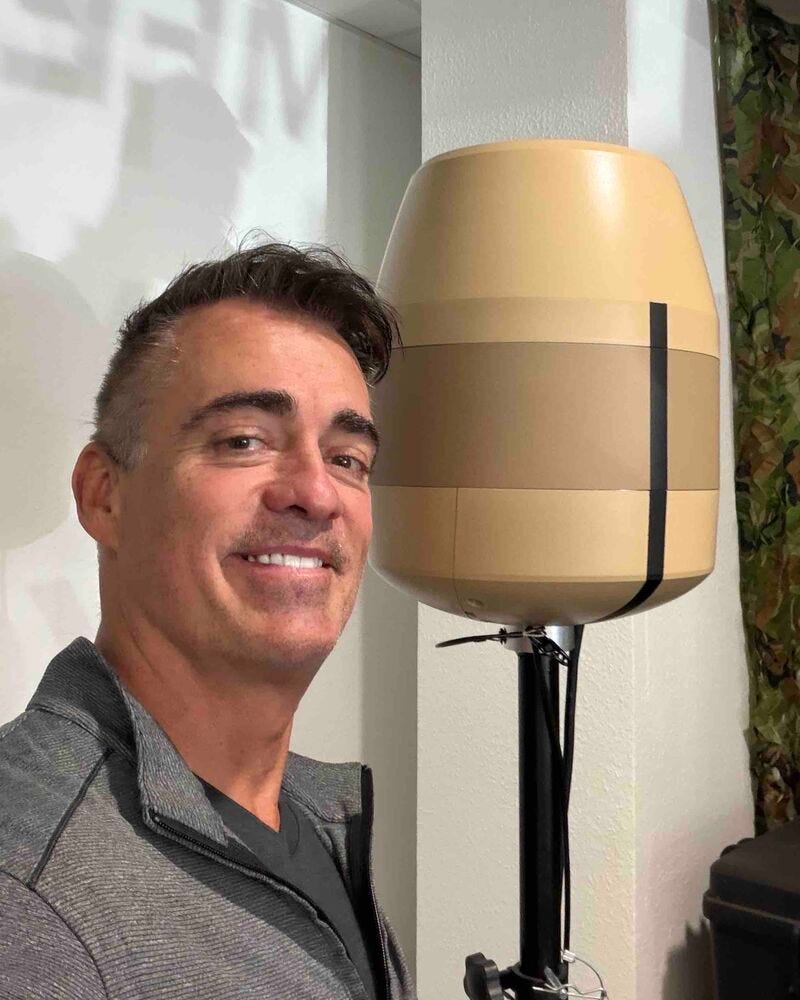
This is what responsible innovation looks like when it meets real world complexity. Systems that allow beneficial technology to move forward while giving organizations the tools to protect people decisively.
Further Reading:
REUTERS reports: Over the past year U.S. security officials have increasingly expressed concern about the use of drones by Mexican cartels, which mostly employ crudely adapted versions of off-the-shelf models to drop drug packages or surveil trafficking routes. There have also been cases, in parts of Mexico further away from the U.S. border, of cartels using the remotely controlled aircraft to drop explosives in deadly attacks. Full article.

Staying Current 📰
We’ve posted before how Rick and I listen to the AI Daily Brief — well, almost daily. It’s a short and digestible way to keep up with what’s happening in AI without spending hours reading.
This was one episode this week that everyone should check out:
Summary: Analysis of the rising anti‑AI movement and constituent groups ranging from existential risk advocates to datacenter protesters. Summary of polling and anecdotes revealing broad public distrust, economic anxiety, and localized pushback. Discussion of industry messaging failures, policy options, and practical steps to address legitimate concerns while supporting beneficial AI adoption.
AI Capability Growth Accelerating
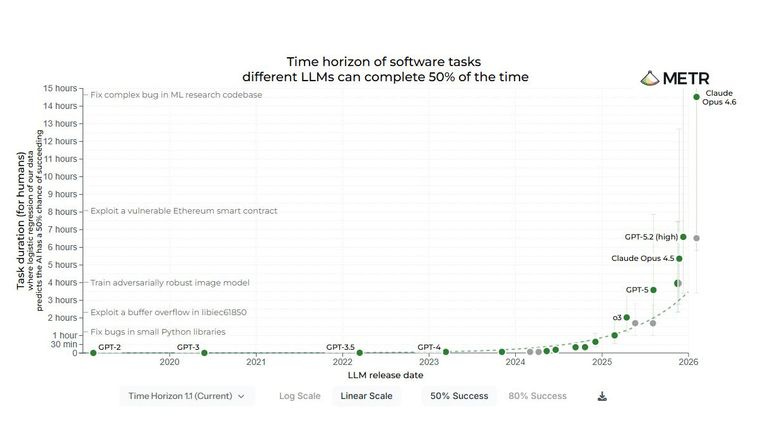
According to Sky News, new research from the nonprofit METR suggests AI capabilities are doubling roughly every seven months, with the latest models showing even faster improvement. Researchers measure progress by testing how long and complex a software task an AI can complete successfully, but experts warn the pace of change is becoming difficult to track as systems rapidly improve. While AI is not yet reliable enough for full automation and employment impacts remain limited, researchers say the accelerating progress could bring both major economic benefits and significant risks — and the speed of development itself is becoming one of the most important signals to watch. Full article
AI Improves Pediatric Cancer Detection
Researchers report that a new AI-driven approach can classify childhood brain cancers with about 92% accuracy by analyzing DNA from cerebrospinal fluid “liquid biopsies.” The system can identify tumor types, detect relapses, and track whether treatment is working — all without the invasive procedures traditionally required for pediatric patients. The technique could improve diagnosis, monitoring, and understanding of childhood brain cancers while reducing the need for risky surgical testing. Full article
Anthropic Refuses Pentagon AI Terms
In an interview with CBS News, Anthropic CEO Dario Amodei said the company refused a Pentagon request for unrestricted military use of its AI, citing firm limits against mass surveillance of Americans and fully autonomous weapons without human oversight. The Trump administration responded by cancelling more than $200 million in federal contracts and labeling Anthropic a national security risk, while rival AI firms continue defense partnerships. The dispute highlights a growing debate over AI governance — whether private companies should set ethical limits on powerful technologies or whether national security needs should ultimately take precedence. Full article
From Experimentation to Everyday Use
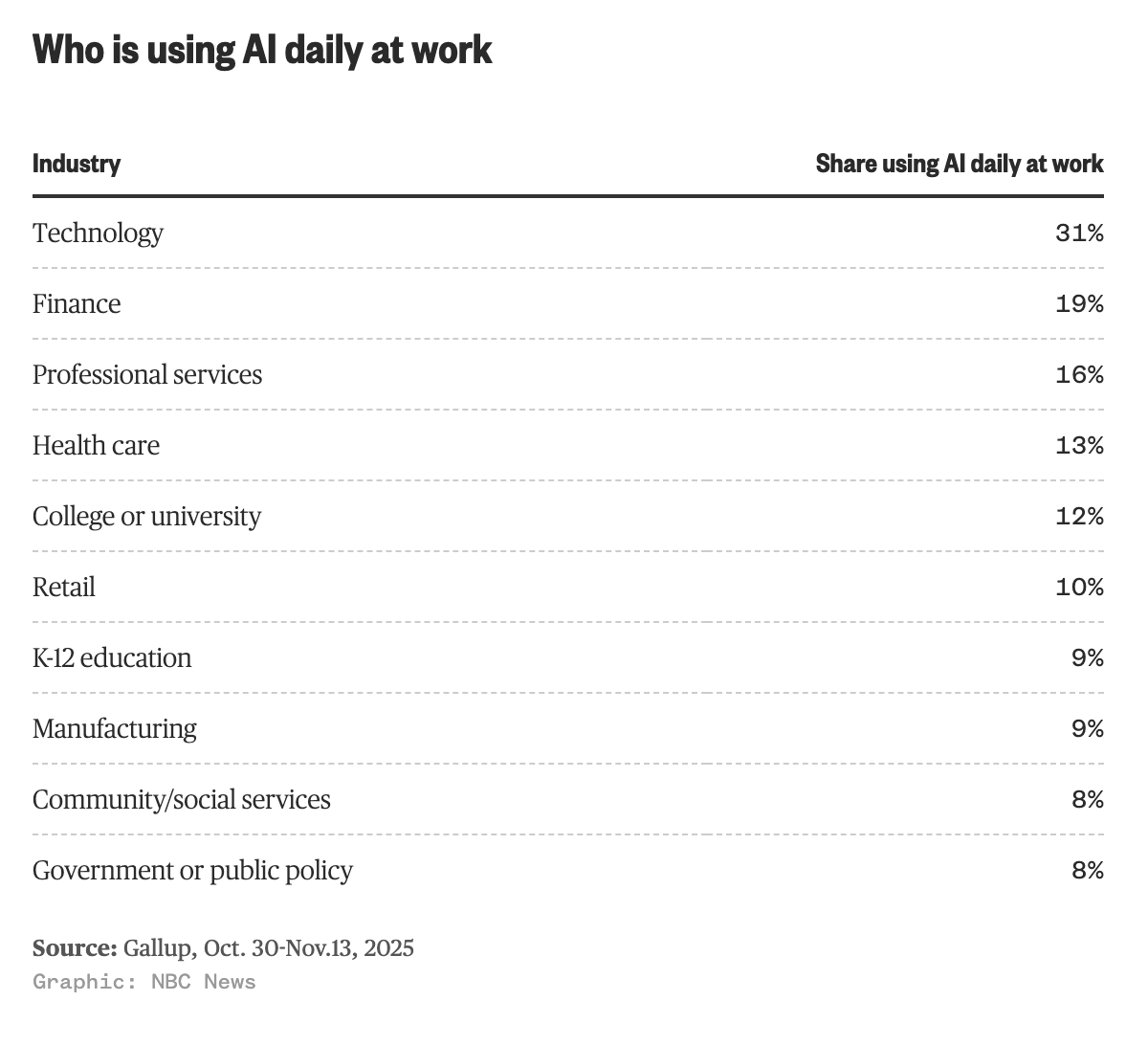
A new Gallup poll suggests the U.S. may be shifting from experimenting with artificial intelligence to integrating it into everyday work and life. About 12% of Americans now report using AI daily at work, up from 4% in 2024, while more than two-thirds of adults say they have interacted with AI tools. Adoption is led by knowledge workers and remote-capable jobs, but skepticism remains high, with roughly 63% of Americans believing AI will reduce jobs, highlighting the tension between rapid adoption and continued uncertainty about AI’s long-term impact. Full article